Anime Like Coppelion
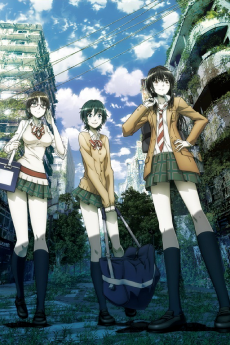
You spend the first ten minutes arguing with the screen about why three high schoolers are strolling through a radioactive Tokyo in pleated skirts and no masks, and then you stop caring because GoHands has drenched the ruins in so much teal bloom and lens flare that the dead city looks like the most beautiful place in anime. This is a show where the real special effect is silence: vines swallowing recognizable Tokyo landmarks, water pooling in stairwells, a distress signal ticking in a place nobody should be alive. Ibara carries the whole squad on her back while Aoi cries through every crisis and Taeko keeps her medical bag zipped like it's a religion, and somehow that dynamic works. The survivors are the gut punch, people who chose to stay in the exclusion zone and made peace with dying there. Twenty years of abandonment, and the most human thing in it is a girl who was engineered, not born, refusing to leave anyone behind.
SYNOPSIS
Twenty years after Tokyo's nuclear catastrophe, the city sits frozen in radioactive decay. No one enters. No one survives. Then a distress signal cuts through the silence, and the Self Defence Force sends in their most unlikely team: three teenage girls from Coppelion, a classified unit engineered with radiation immunity built into their very genetics. Aiko, Ibara, and Taeko move through the poisoned streets without protective suits, without fear, searching for whoever sent that signal. But their mission uncovers darker truths. Why were they really created? What happened to the survivors they're supposed to find? And how long can they keep their existence secret when powerful forces want them contained or destroyed? The girls navigate a desolate Tokyo that belongs to no one, caught between their manufactured purpose and their emerging humanity. They're weapons designed to function in humanity's most toxic spaces, yet each rescue attempt, each connection with a survivor, pulls them further from the sterile mission briefings that define their existence.