Anime Like Harlock: Space Pirate
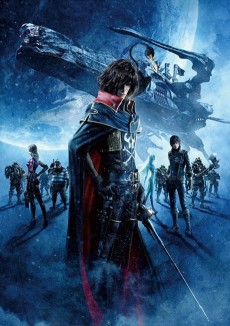
It parks the Arcadia in front of you, skull prow first, black sails of dark matter bleeding off the hull, and dares you to care about anything else on screen. Aramaki's CG is the whole argument here: every rivet, every cape ripple, every fleet engagement rendered at a scale most hand-drawn space opera can only imply. Harlock himself is barely a man anymore, an immortal scar with a plan to detonate the galaxy back to zero, and the film knows that reading him as a hero is your problem, not his. Yama boards as a Gaia Coalition plant and stays a sulking blank, Yattaran keeps building his plastic models while worlds burn, and the plot knots itself into something closer to a mood than a story. Fans of the 1978 Matsumoto silhouette will argue about this one until they die. Watch it loud, watch it big, and let the Arcadia do the talking.
SYNOPSIS
Humanity spread across the galaxy centuries ago when Earth became uninhabitable, but now those scattered billions want their planet back. The Gaia Coalition controls access to Earth, hoarding it as mankind's most coveted prize while keeping the truth about the planet locked away from everyone. Captain Harlock, a lone pirate with nothing left to lose, refuses to accept their lies. With his ragtag crew aboard the Arcadia, Harlock charts a course toward rebellion against the most powerful force in human space. He's not fighting for glory or wealth, but for the freedom to know what really happened to Earth and why the Gaia Coalition will kill to keep that knowledge buried. His mission puts him at odds with the entire galaxy's governing structure, forcing impossible choices between survival and truth. This is space opera built on defiance. The tone swings between intimate character moments and grand-scale warfare, grounded by Harlock's quiet certainty that some fights are worth losing everything for.