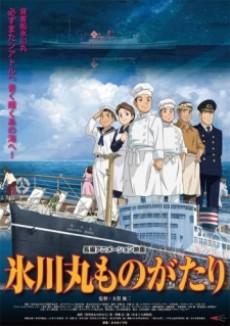
Anime Like Hikawa Maru Monogatari
This one asks you to sit still. No mecha, no arcs, just a boy who lost his mother to the Great Kanto Earthquake and now stands over a soba pot with his father, deciding whether to leave the stall behind for a galley on the water. Hirayama Jirou's view of the Hikawa Maru is not the captain's bridge or the first class deck, it is the kitchen, the prep, the daily labor that keeps a famous liner running while decades roll over it. Eighty-five years of a ship's life, told from the person peeling and chopping below. The whole film trusts that a working kid's ordinary shift is enough to carry history, and it is. If you have ever loved a place because you worked in it, this lands somewhere quiet and stays.
SYNOPSIS
Jirou lost everything when the Great Kanto Earthquake claimed his mother. Now he works alongside his father at a small soba stall, but the pull of something bigger drives him toward the sea. When he secures a position in the galley of the Hikawa Maru, one of Japan's most legendary ocean liners, he boards a ship carrying centuries of stories in its steel hull. As Jirou cooks for passengers and crew, the film unfolds the vessel's remarkable journey across decades. Through his perspective in the ship's kitchen, we witness the Hikawa Maru transform from a symbol of national pride to a floating witness of war, peace, and change. The ordinary work of preparing meals becomes a thread connecting Jirou's personal grief to the larger currents of history that shaped Japan itself. What emerges is a quiet meditation on how individual lives intersect with monumental events, and how a ship meant for leisure becomes a repository of collective memory. Jirou's story and the Hikawa Maru's legacy become inseparable, each giving meaning to the other across time.