Anime Like House Hunting
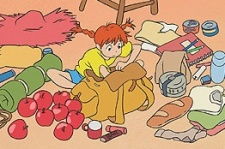
Twelve minutes in, you realize nobody has told you what you're watching and you don't care. Miyazaki throws out the rulebook: every sound effect is a human voice, mouths making the wind and the water and the footsteps, and the onomatopoeia gets painted right into the frame like a picture book someone flipped open on your lap. Fuki with her absurd overpacked rucksack, leaving an apple at a roadside Jizo just to ask permission to keep walking, is the whole Ghibli worldview in one gesture: you are a guest here, act like it. Then Nurari-Hyotan and Ushi-Oni turn up and the film treats river and shrine guardians as neighbors rather than monsters, which is somehow more unsettling and more comforting at once. It only ever played at the Mitaka museum, so almost nobody talks about it, which makes finding it feel like being handed a secret.
SYNOPSIS
Fuki carries everything she owns on her back, determined to find a place to call home. Her journey takes her beyond the crowded streets of the city and onto a quiet, overgrown path where the modern world falls away. When she encounters a weathered stone statue, she leaves an offering and asks permission to pass, treating the spirits of this place with respect. What unfolds is a series of strange meetings. River creatures emerge from the water. Shrine guardians block her way. Each encounter feels neither threatening nor welcoming, but rather curious,a reminder that she's walking through a world that belongs to others before it belongs to her. The film captures something vital about displacement and belonging: the way a person finds home not by conquering a space, but by learning to coexist with it. Quiet and contemplative, this short rewards patience with moments of wonder. It's for viewers drawn to gentle stories about movement through magical spaces and the small acts of kindness that smooth a traveler's path.