Anime Like Ima, Futari no Michi
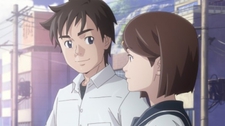
It asks for twenty minutes and then sits in your chest for a week. This is a commissioned piece, made to thank the people who showed up for the prefecture's reconstruction and to keep 2011 from softening into a date on a calendar, and it never once raises its voice to do it. Jun Agatsuma is a doctor's daughter turning her future over and over in her hands. Kunpei Satou already knows his: the boats, the same as his father's. Two sixteen-year-olds living out the difference between a life you choose and a life that was decided for you, in a place where the ocean took the choosing away from a lot of people. There is no spectacle here, no swelling catharsis, just the quiet insistence that these kids still have to grow up. That is the whole gut punch.
SYNOPSIS
Two teenagers stand at crossroads before everything changes. Jun, daughter of a doctor, carries expectations about her path forward. Kunpei, a fisherman's son, accepts the tradition waiting for him. Their small corner of Miyagi Prefecture feels predictable, settled. Then the 2011 earthquake and tsunami arrive, and their world fractures. What follows isn't a story about disaster itself, but about what comes after. As their region begins to rebuild, Jun and Kunpei must reconsider who they are and who they want to become. The disaster strips away assumptions. It forces real choices. This special operates as both personal narrative and collective memory. It honors those affected by showing how individual lives reshape themselves in the aftermath of tragedy. The tone is quiet and reflective rather than sensational, focusing on the interior work of moving forward when everything external has been shaken loose. It's a brief window into resilience that refuses easy answers, acknowledging both loss and the tentative possibilities that emerge when young people must grow up faster than they expected.