Anime Like Isewan Taifuu Monogatari
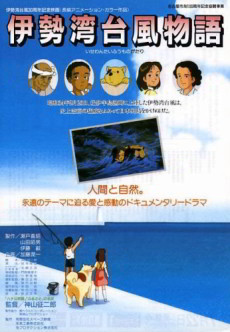
This one doesn't build dread, it just lets the water come. Made in 1989 for the thirtieth anniversary of the Isewan Typhoon, it carries the weight of a memorial rather than a disaster movie, which means no heroic rescues scored to swelling strings, no camera lingering on the wind for the thrill of it. Vera hit the Ise Bay coast in September 1959 with gusts past 300 km/h and left more than five thousand dead or missing, and the film animates that number back into people who had ordinary evenings before the sea came inland. The quiet is the whole technique. If you came up on the louder anti-war and disaster classics and assumed you'd found them all, this is the one nobody put on your list, and it will sit on your chest for a week.
SYNOPSIS
September 1959. A massive storm system bears down on Japan's coast with terrifying speed and force. Ordinary people caught in the path of nature's fury face impossible choices: stay or flee, fight or surrender, survive or protect others at any cost. Isewan Taifuu Monogatari captures the human dimension of disaster through interconnected stories of families, workers, and communities bracing for impact. As wind speeds reach catastrophic levels, individual dramas play out against a backdrop of institutional failure, unexpected heroism, and the raw power of nature indifferent to human fragility. The film doesn't distance itself from tragedy. Instead, it sits inside the fear and confusion of people experiencing the worst weather event Japan has known in modern times. Relationships fracture under pressure. Strangers become lifelines. The storm itself becomes almost a character, forcing reckoning with what survival actually costs. Made thirty years after the real typhoon claimed thousands, this memorial doesn't shy away from loss. It honors those who didn't make it through by refusing to look away from what they endured.