Anime Like KAI DOH MARU
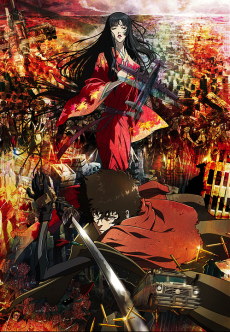
This one doesn't tell you a story so much as smear one across your eyes and dare you to keep up. Production I.G made a 45-minute Heian nightmare where you can still see the pencil under the paint, colors bled out to bone and ash, CG camera moves gliding through hand-drawn murk. Follow the plot on a first pass and you will lose, because Kaidomaru's whole deal, the girl passing as a man with the kanji for flame burned onto her arm, riding as one of the Four Devas for a dead Raikou Minamoto, arrives in fragments rather than exposition. The demons in the forests and rivers aren't monster-of-the-week set pieces here, they're texture, the ambient hostility of a Kyoto that hasn't decided yet whether spirits are real. What you remember afterward isn't who won. It's her arm, and the fact that she kept swinging for someone who wasn't coming back.
SYNOPSIS
During Japan's Heian period, supernatural threats lurk in every shadow. Spirits haunt the wilderness, and only the strongest warriors can stand against them. Kaidomaru is one of these fighters, a woman concealing her identity beneath masculine armor and bearing a flame tattoo as proof of her legendary status among the Four Devas. She carries grief like a weapon: her lover, the noble Raikou, sacrificed everything to shield Kyoto from catastrophe, and she refuses to let his death mean nothing. But her greatest challenge emerges from an unexpected place. The princess she once played with as a child has fallen under a curse so vile it transformed her into something monstrous. Now Kaidomaru must hunt down the woman she once knew, driven by duty and vengeance in equal measure. This single episode of brutal action and tragic history captures a warrior's desperate attempt to honor her past while destroying a corrupted future. It's intimate and violent, grounded in Japanese folklore yet intensely personal.