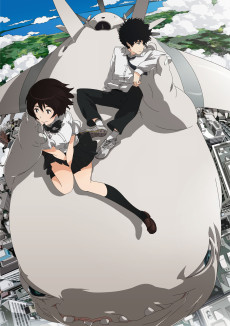
Anime Like Kyousougiga
Twenty-odd minutes in, you'll realize nobody is going to explain anything to you, and you'll stop caring. This is the 2011 pilot that Rie Matsumoto used to announce herself: Koto crashing into Mirror Kyoto swinging a hammer bigger than she is, a monk who won't give straight answers, a tech-obsessed girl chasing her through streets that were clearly drawn by someone having the time of their life. The color work alone justifies the runtime, layouts stacked with impossible Kyoto geometry, yokai designs with actual personality instead of stock spookiness. Go Shiina's score does half the storytelling, carrying scenes that dialogue never bothers to clarify. Yes, it's incoherent on first pass. It's incoherent the way a great opening chord is incoherent, and people who found it early have been quietly shoving it at friends ever since.
SYNOPSIS
Koto stumbles into Mirror Kyoto, a twisted reflection of the ancient capital where the boundaries between the human world and the spirit realm have fractured completely. What was meant to be a quick visit becomes something far stranger when she encounters a enigmatic Buddhist monk and a gadget-obsessed girl who won't stop chasing her through neon-soaked streets and impossible architecture. The city pulses with beautiful chaos. Spirits wander openly, technology clashes with tradition, and everyday moments explode into sudden violence and absurdist comedy. Koto embraces it all with infectious enthusiasm, finding genuine joy in the madness surrounding her. Yet beneath the vibrant surface, unseen forces are moving. Someone orchestrated her arrival. Someone wants something from this fractured world, and the deeper Koto digs into who she really is and why she's here, the more the whimsical facade cracks to reveal something far darker underneath. This is a story that rewards viewers who love kinetic action sequences married to genuine mystery, where magical realism bleeds into genuine dread.