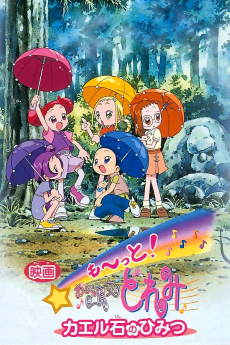
Anime Like Motto! Ojamajo Doremi Kaeru Ishi no Himitsu
This one doesn't ask you to brace for a threat, and that's the whole point. Doremi, Aiko, Hazuki, Onpu and Momoko go out to Doremi's grandpa's place in the country, and the film just lets them be kids in a landscape that remembers magic better than the city does. The frog stone is the kind of idea only Doremi would do straight: not a weapon, not a plot device, just proof that magic and ordinary people used to share the same fields. Aiko softening toward grandpa lands harder than any transformation sequence, because Aiko is the one who guards her feelings like a Osaka kid with something to protect. And the scrap of Majokai history Doremi picks up recontextualizes the series without a single lecture. Short, warm, and gone before you're ready, like every good summer visit to somebody's grandparents.""
SYNOPSIS
When Doremi and her four apprentice witch friends visit her grandfather's countryside home, they stumble upon an old legend: the frog stone, a mystical landmark where magic once thrived in rural Japan. As the girls investigate the stone's secrets, they uncover forgotten memories of how magic and the ordinary world used to coexist, before the magical kingdom retreated from human sight. What begins as a casual summer trip becomes a journey through time and nostalgia. Aiko reconnects with Doremi's grandfather, discovering bonds she'd let fade over the years. Meanwhile, Doremi herself learns truths about her family's connection to magic that reshape how she understands her own powers. The movie captures the bittersweet feeling of visiting places tied to childhood and family history. It's less about dramatic battles and more about quiet moments of realization: how magic lives in memory, in relationships, and in the spaces between past and present. For viewers who grew up with these characters, it's a touching look at how they've matured while staying true to what makes them special.