Anime Like Nausicaä of the Valley of the Wind
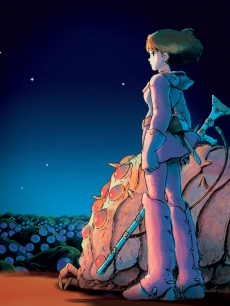
It puts you in a gas mask inside a dead world and dares you to find it beautiful. Nausicaa kneeling in her secret basement garden, proving the spores grow clean in clean water and soil, is the thesis of every Miyazaki film that came after, delivered in 1984 with pencil and paint. The ohmu are not monsters, they are grieving, and the moment she throws herself in front of the herd in a blue robe stained with golden blood lands harder than any battle. Watch the Gunship glide, watch the Mehve cut across those spore clouds, watch Kushana stand there with her prosthetic arm exposed and refuse to be a simple villain. Yes, the environmental sermon gets loud, and yes, the manga is deeper than two hours can hold. Doesn't matter. You still remember the little fox squirrel biting her finger, then licking it.
SYNOPSIS
A thousand years of war has left the world toxic and transformed. Humanity clings to survival in scattered enclaves, where Princess Nausicaä tends her small coastal valley with wisdom beyond her years. Between her home and the rest of civilization sprawls the Sea of Corruption, a vast fungal jungle that spreads relentlessly across the land, spawning colossal insects that guard its expansion. When an airship crashes near the Valley carrying a terrible secret, Nausicaä finds herself thrust into a larger conflict. A neighboring kingdom seeks to weaponize the insects themselves, believing domination is humanity's only path forward. Nausicaä instead pursues an impossible dream: understanding the creatures everyone fears and finding whether nature's devastation can be reversed. What unfolds is an adventure that asks whether humanity deserves salvation and what price that salvation might demand. Nausicaä's journey blends spectacular action across poisoned skies with genuine philosophical weight, creating something that works as both thrilling spectacle and meditation on humanity's relationship with the natural world.