Anime Like Nouryou Anime: Denkyuu Ika Matsuri
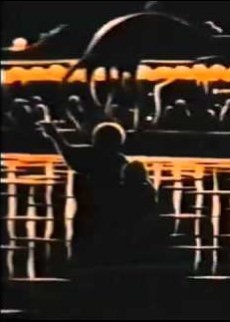
This one doesn't scare you, it dissolves you. There is no protagonist to root for, just a dead man crossing the line into the kingdom of the dead, and the film treats him as a vessel rather than a person. The centerpiece is the dance of the sperm and the egg, birth staged as an afterlife vision, death handed back to you as a gateway instead of an ending. It moves slowly on purpose, no spectacle, no score swelling to tell you when to feel something, just the long pull upward toward the sky. Horror here is conceptual, the sick logic of a loop where dying is the entrance and being born is the exit. Watch it alone, late, and try to shake the image afterward.
SYNOPSIS
A man finds himself caught between worlds after crossing a threshold he cannot return from. What begins as a disorienting descent into darkness transforms into something far stranger: a realm where the fundamental forces of life itself perform in grotesque, fluid motion. Sperm and egg dance in cosmic patterns while the deceased watches, pulled upward by forces beyond comprehension. The film operates as surreal body horror filtered through existential dread. Biological imagery becomes abstract and alien, stripped of its clinical familiarity. Every image carries weight, every movement suggests meaning just beyond reach. The atmosphere grows increasingly hallucinogenic as the boundary between the physical and the otherworldly dissolves completely. This is cinema for viewers drawn to the uncanny and the deeply unsettling. Those who find horror in the unknown, who appreciate psychological unease over jump scares, who want their discomfort to linger long after the credits roll. The film refuses easy answers about death and rebirth, instead choosing to disorient and provoke. It's brief but densely weird, the kind of experience that demands interpretation rather than explanation.