Anime Like Ojii-san no Lamp
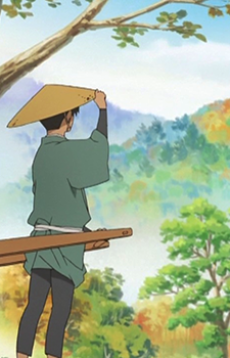
It sits you down and makes you watch a man destroy the thing he loves, and you understand exactly why. Minosuke starts with nothing, sees a kerosene lamp burning in town, and builds an entire life out of carrying light to houses that never had it. Then the electric wires come, and the story refuses to let him be a villain about it, even when he's at his ugliest and most desperate to stop progress. The lamps hung in the tree branches over the water, the stones, the glass going one by one: twenty-three minutes and that image stays parked in your chest for years. Telecom's hand is all over the quiet stuff, the lamplight on walls, the patience of a shot that just lets an old man finish his sentence. Niimi Nankichi wrote it for children. It absolutely was not for children.
SYNOPSIS
A boy stumbling through a game of hide-and-seek discovers something unexpected: an old lamp, weathered and strange. His grandfather recognizes it immediately, and what follows is a journey backward through time. The old man recounts his own youth, revealing how this humble object once held meaning in a Japan transforming before his eyes. As he speaks, the world shifts around them,railroads expand, cities grow, traditions fade into unfamiliar skylines. The lamp becomes more than just a relic. It anchors a story about what gets left behind when a country modernizes, what bonds break under the weight of progress, and what small things manage to survive the passage of decades. The boy listens, gradually understanding that his grandfather's past isn't distant history but something alive and present, connected to the very object in his hands. This film captures the bittersweet ache of generational distance and the quiet power of objects to bridge it, grounding Japan's sweeping transformation in one family's intimate conversation.