Anime Like Oshin
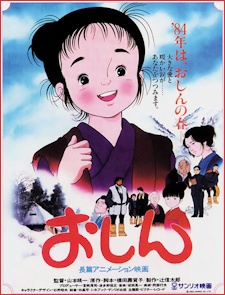
This one doesn't build to a gut punch, it just sits with a seven-year-old and lets you do the math. Oshin gives up school and walks out of a rice farmer's house where her grandmother, her pregnant mother, her father and brother in the fields all can't scrape together enough to eat, and she goes to work as a servant for people with money. The animation stays quiet and unshowy on purpose. No swelling spectacle, no villain to hate, just the daily arithmetic of a child being spent to keep a family alive, and the wealthy household treating her exactly the way you're dreading. It is a character study in the strictest sense: nothing happens that isn't happening to her. Bring tissues and don't watch it in public, because the moment that breaks you is a little girl being polite about something no child should have to be polite about.
SYNOPSIS
A seven-year-old girl watches her family starve. Her father and brother labor endlessly in the rice fields while her pregnant mother and grandmother go hungry. When the choice comes down to survival, Oshin volunteers herself as a servant to a wealthy household, believing this sacrifice will save those she loves. What awaits her is far harsher than poverty. Behind the walls of her new home, Oshin discovers cruelty she never imagined. The family treats her not as a person but as property, working her to exhaustion and showing her no mercy. Each day brings fresh humiliation and hardship, testing whether a child's determination can outlast the world's indifference. This is a story about resilience forged in impossible circumstances. Oshin's journey transforms from an act of selfless love into something larger: a portrait of how the powerless endure when they have nowhere left to turn. The film captures rural Japan's grinding poverty with unflinching honesty, following one girl's struggle to hold onto her humanity when society has already decided she's disposable. Raw and emotionally brutal, it's cinema that stays with you long after it ends.