Anime Like Soaring Sky! Precure
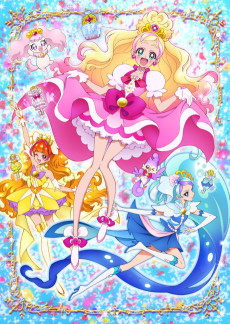
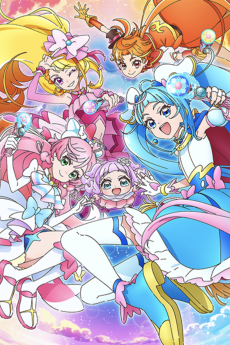
It hands the lead role to a blue Cure and dares you to keep calling that a gimmick. Sora Harewataru shouts "it's hero time" like she means it, and the show backs her up with fight animation that treats a magical girl punch as actual impact, not sparkle filler. Then it stacks the roster nobody expected: Tsubasa flying in as a male Cure, Ageha showing up as a college-aged one, and baby Elle eventually growing into Cure Majesty. The Sora and Mashiro dynamic is the real engine, one girl who charges at danger and one who insists on the softer answer, and fifty episodes never let that get stale. Be honest about the back half, though: the post-midpoint Underg brass are dull, and a chunk of episodes coast. You stay anyway, because Sora reaching for someone falling is the most reliable image in the franchise right now.
SYNOPSIS
When Princess Eru vanishes into the Underg Empire, a fearless girl named Sora chases after her through a dimensional rift, tumbling from the peaceful Sky Land into an ordinary human world. Everything here bewilders her: strange metal contraptions called cars, glowing screens called TVs, the noise and chaos of city life. None of it makes sense, and she has no time to understand it. Stranded between worlds with a princess to rescue, Sora discovers she's not alone in this mission. Ordinary girls from the human world possess the power to transform into Pretty Cure, warriors of light tasked with protecting both dimensions. Together they must balance their normal lives with combat against Underg's relentless monsters, all while keeping their true purpose hidden. The fate of two worlds now rests on an unlikely team of heroes who speak different languages, see reality through completely different eyes, and somehow have to work together. The real challenge isn't just saving the princess. It's figuring out how to be a team when everything about them is fundamentally different.