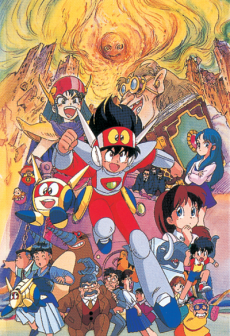
Anime Like Story from Genji Agedama
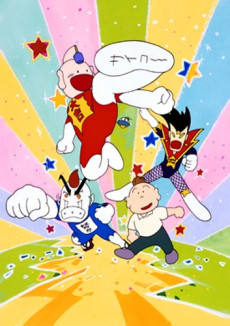
It puts you back at the desk where world-saving has to fit around homework. Agedama's whole deal is that he is a superhero in training, not a superhero, so every transformation into Agedaman carries the wobble of a kid who has not earned the cape yet and knows it. And his partner is Wapuro, a floating word processor, which is the most gloriously 1991 sidekick concept ever green-lit: the future as a talking machine that hovers at shoulder height. The villains turning ordinary people into monsters keeps the threat local and personal instead of cosmic, so the fights happen in the space between school and home. Across 51 episodes it builds that rhythm you only get from weekly kids' TV, gag, monster, save, repeat, until the repetition itself becomes the comfort. The real punchline is that no matter how the night goes, he still has class in the morning.
SYNOPSIS
Elementary school kid Agedama lives a double life that would exhaust anyone twice his age. By day he's navigating homework, friendships, and the usual childhood chaos. By night, he transforms into Agedaman, a rookie superhero armed with nothing but determination and Wapuro, a wise-cracking sentient computer that floats alongside him dispensing both tech support and comedic relief. The real threat comes from a shadowy crime syndicate with a twisted specialty: they've perfected the art of turning ordinary people into monsters. Each beast they create carries its own grotesque powers and personality, forcing Agedaman into increasingly bizarre and hilarious battles. Wapuro provides real-time analysis and constant quips, creating a dynamic where the banter matters as much as the action itself. What makes this work is the tonal balance. One moment you're laughing at the absurdity of a third-grader saving the world, the next you're watching genuine stakes unfold. The show commits to its premise without apology: this kid is exhausted, his computer is sarcastic, and the bad guys keep getting weirder. It's pure 90s energy wrapped in genuine heart.