Anime Like Tabi
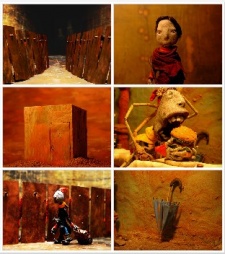
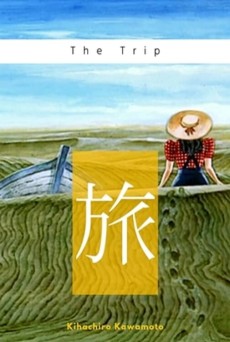
It works on you like a dream you can't shake off, quiet, unhurried, and stranger the longer you sit with it. The whole thing is built from cut paper, kiri-gami figures sliding across a Western city that never names itself, and the backdrops are stacked with borrowings from Dali, Magritte, de Chirico and Escher until the geography stops obeying you. There's no spectacle here and it doesn't want any. Just a girl walking through a place that keeps rearranging itself, and a Su Tong-Po poem threaded through it that reframes everything around it. The gut punch is the ending: she comes home completely altered and nobody can tell, and she's the only one who will ever know. Watch it twice. The second pass is when the paper stops looking like paper and starts looking like a life.
SYNOPSIS
A girl boards a train to an unnamed Western city, carrying nothing but curiosity and uncertainty. What begins as a physical journey quickly transforms into something far stranger: each street corner bends logic, each building defies gravity, each shadow holds a memory that isn't quite hers. The world around her seems painted by someone's fever dream, where impossible architecture and melting perspectives become as real as the ground beneath her feet. As she wanders deeper into this labyrinth, she collects fragments of understanding about herself. Joy arrives unexpectedly. Pain cuts deeper than anticipated. The city becomes a mirror reflecting truths she never knew she needed to confront. Every encounter shifts something fundamental inside her. When she finally boards the train home, she carries a transformation no one else will recognize. The scars are invisible, the growth internal, the knowledge hers alone. Tabi captures that paradox of returning to your old life fundamentally changed while everyone around you notices nothing at all. It's a meditation on solitary growth wrapped in surreal, haunting imagery.