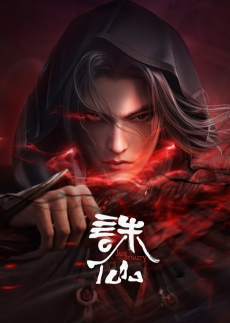
Anime Like Zhu Xian 2
Season two stops being a cultivation school story and starts collecting on everything the first one set up. Zhang Xiaofan walked out of a burned village, sat at the bottom of Big Bamboo Peak with no talent worth mentioning, then won the Seven Meridians Tournament anyway, and the show has spent all that time quietly loading the gun. Lu Xueqi and Biyao are both still there, both still standing on opposite sides of a line he refuses to draw, and the Kongsang trip made that impossible to keep pretending about. The donghua's strength has always been the stillness between the sword flashes, the Qingyun Sect's righteousness starting to look less like virtue and more like policy. If you came for wuxia spectacle you get it, but what sticks is a kid who never asked to be anyone, holding a stick he doesn't fully understand, being asked to choose.
SYNOPSIS
Zhang Xiaofan returns to the Qingyun Sect carrying secrets that threaten everything he believed about his order and himself. The discovery of his true origins continues to unravel, forcing him to question the path his elders set him on and the bonds he's formed along the way. As tensions between righteous sects and demon cultivators escalate into open conflict, the line between good and evil becomes increasingly blurred. Zhang Xiaofan finds himself caught between loyalty to his sect and his growing connections to those deemed enemies by orthodox cultivation society. New conspiracies emerge from the shadows, revealing that the conflicts consuming the martial world run far deeper than surface rivalries. With stakes mounting and allies becoming liabilities, Zhang Xiaofan must navigate a landscape where trust is currency and every choice carries devastating consequences. The journey that began with a search for belonging now demands he forge his own destiny, regardless of the cost.