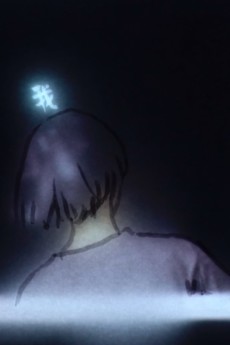
Anime Like Deep In Reflection
This one doesn't ask for your attention, it waits until you slow down enough to give it. A woman, a forest pool, and the thing looking back at her: that's the whole cast, and the film treats the reflection as a second character rather than an effect. The Escher logic is the point, up folding into down, self folding into self, until you stop trusting which side of the water you're on. Moths keep drifting through, and once you clock what they're doing there, the second viewing turns into a different movie entirely. Nothing explodes, nobody explains, and the animation carries every ounce of the meaning, which is exactly why people who need dialogue to feel something bounce right off it. Watch it alone, late, with the lights off, and see if you like what surfaces.
SYNOPSIS
A woman finds herself in a dense forest, drawn to a still pool of water. When she gazes into its surface, her reflection stares back, but something is wrong. The image moves independently, wearing expressions she doesn't remember making, responding to thoughts she hasn't spoken aloud. Around them, moths circle endlessly, their wings creating patterns that seem to mirror the woman's inner turmoil. As the boundary between self and reflection blurs, she begins questioning which version is real, which one is in control. The forest becomes a liminal space where memories tangle with present moments, and every attempt to understand her own mind only deepens the confusion. This psychological journey strips away certainty, forcing her to confront the fractured pieces of her identity. The quiet, dreamlike atmosphere intensifies as the distinction between observer and observed collapses completely. What starts as a moment of self-discovery becomes something far more unsettling: a meditation on consciousness itself, and whether understanding the self is even possible.