Anime Like Future Folktales
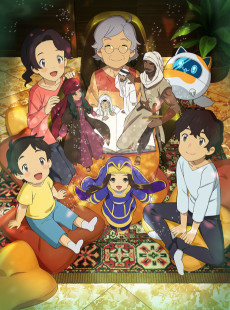
This one slows your pulse down on purpose. Asma doesn't lecture her grandkids, she just starts a story, and by the time the Arabian Peninsula folktale wraps, the modern problem that had them sulking in 2050 Riyadh has quietly dissolved. Anis, the robot cat, is the Doraemon-shaped hook that gets kids in the door, but the real machinery is the voice work and sound design, which carry the mood the art alone doesn't have the budget to sell. Yes, the animation is serviceable rather than gorgeous, and if you came for spectacle you'll be checking the runtime by episode two. Everyone else gets thirteen episodes of grandmother-voice comfort, where each kid is written as a distinct person instead of a lesson delivery system. It's the show you put on when the world has been loud all day and you want someone older to talk you down.
SYNOPSIS
Asma is a grandmother living in 2050 Riyadh who believes the best way to understand who you are is to know where you come from. When her grandchildren struggle with the pressures of their high-tech world, she decides to give them something no screen can offer: the stories that shaped their culture for centuries. With their quirky robotic cat Anis as their guide, the kids travel through vivid retellings of Arabian Peninsula folklore, watching heroes face impossible odds, lovers overcome tragedy, and ordinary people discover extraordinary courage. Each tale connects directly to whatever challenge the children are facing in their modern lives. What unfolds is part time-travel adventure, part family therapy, where ancient wisdom proves surprisingly relevant to contemporary struggles. The show balances spectacular world-building with intimate family moments, celebrating Arabian heritage through animation that brings old myths to vibrant life. It's storytelling about the power of storytelling, where a grandmother's voice becomes the most valuable technology of all.