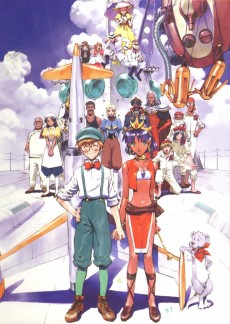
Anime Like Nadia: The Secret of Blue Water
It starts as a Jules Verne romp with a circus girl and a lovestruck kid inventor, and then it quietly starts taking your heart apart. Nadia is not a sweet heroine, she is stubborn, self-righteous, cruel to Jean about his meat-eating and his optimism, and the show makes you sit with that until you understand why. Anno's fingerprints are everywhere: Nemo's guilt, Electra's grief, Gargoyle's masked contempt for human weakness, and a Nautilus that costs something every time it wins. The animation in the first stretch and the final act is Gainax firing on everything, all sweeping undersea light and genuine spectacle. Yes, the Island and Africa arcs are a slog of bad gags and stalled plot, and yes, you push through them anyway. Because Marie and King and the Grandis gang have already adopted you by then, and the ending earns every tear it takes.
SYNOPSIS
In 1889, the world teeters on the edge of technological revolution. A mysterious girl named Nadia carries a blue stone that marks her as the key to an ancient secret, one that a shadowy organization known as Neo-Atlantis will stop at nothing to claim. When she escapes into the arms of Jean, an idealistic young inventor, their chance meeting spirals into a desperate chase across oceans and continents. Pursued by enemies with impossibly advanced technology, they find sanctuary aboard the Nautilus, a revolutionary submarine captained by the enigmatic Nemo. Together, this unlikely crew uncovers the truth about Atlantis and the madman behind Neo-Atlantis's rise to power. What begins as a tale of adventure becomes something far darker: a race against time to prevent a global catastrophe orchestrated by those who dream of resurrecting a dead civilization. Blending Jules Verne's spirit of wonder with genuine stakes, the story pivots between moments of levity and real danger, romance and spectacle. It's a journey that demands everything from its heroes.